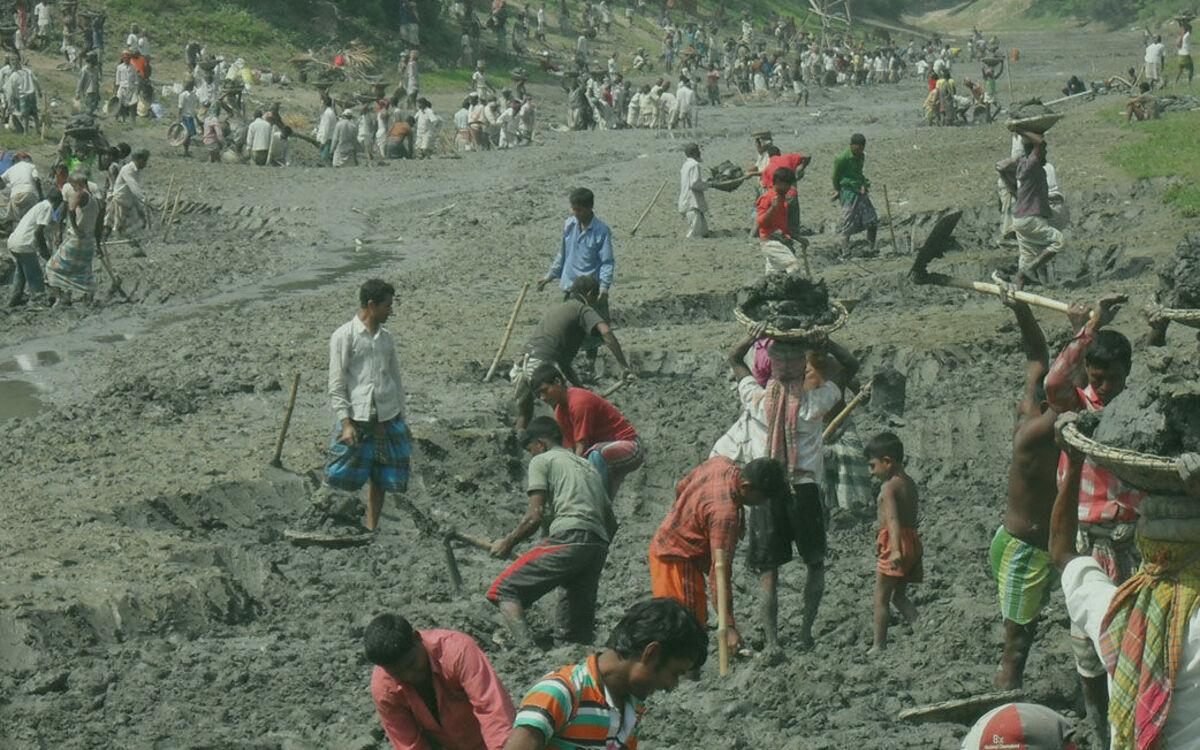
When a wetland silts up, a community loses more than water
Across the Pabna floodplain, beels (seasonal wetlands) and small rivers are a shared resource: they hold water, recharge the land and feed fishing households. As they silt up, water retention falls, fish stocks collapse and the families who depend on them lose income and food security.
What SDKS did
Under the Wetland Biodiversity Rehabilitation Project (WBRP), SDKS carried out a series of restoration works:
- Re-excavation of the Kasgasshory river (2011-2012 and 2012-2013).
- Re-excavation of the Nandiara Beel (2013-2014).
- A development and management plan for the wider wetland system.
Each phase paired physical excavation with community stewardship arrangements, so the restored water bodies would keep delivering value rather than silt up again.
The result
Restored water retention revived fishery stocks and directly benefited the communities whose food and income depend on the wetlands. The work also extended SDKS's environmental rehabilitation practice from rivers to inland beels - part of a longer commitment to climate and environment that runs through the organisation's history of social forestry and char-land plantation.